


IkeWai marine CSEM
Electromagnetic imaging of deep submarine freshwater offshore Hawaii
PI: E. Attias
Collaborators: D. Thomas (HIGP), H. Dulai (HIGP), S. Constable (SIO)
This research harnesses a joint-interpretation approach, using a surface-towed controlled-source electromagnetic (CSEM) system in conjunction with high-resolution multi-beam sonar for seafloor mapping and water-column scanning to obtain 2-D resistivity images of deep submarine groundwater deposits offshore the Hawaiian Islands. This study revealed a novel onshore-to-offshore transport mechanism for freshwater in Hawai'i (Attias et al., 2020), most likely the governing mechanism in other volcanic islands worldwide. Our CSEM inversion models also imaged multiple large-scale freshwater plumes extending from the seafloor to the ocean surface (Attias et al., 2021). This experiment offers an effective method for elucidating hydrogeologic and oceanic processes that affect biogeochemical cycles in coastal waters worldwide.
Link to the project's official website: IkeWai Marine CSEM


This marine CSEM project used a newly developed surface-towed marine electromagnetic Porpoise CSEM array system owned by the Scripps Institution of Oceanography EM laboratory. A 2-D CSEM inversion algorithm has been implemented to image and characterise the spatial distribution, interconnectivity, and transport mechanism of freshwater from the coastal aquifer to offshore Hawai‘i via a deep submarine groundwater multilayer system.


IkeWai CSEM
Survey area: Hawaii, Big Island (Kona)
Survey dates: September 2018 (14 days)
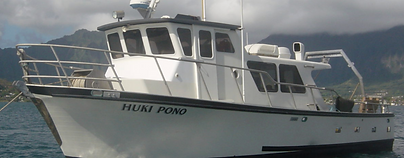
RV spec: Huki Pono